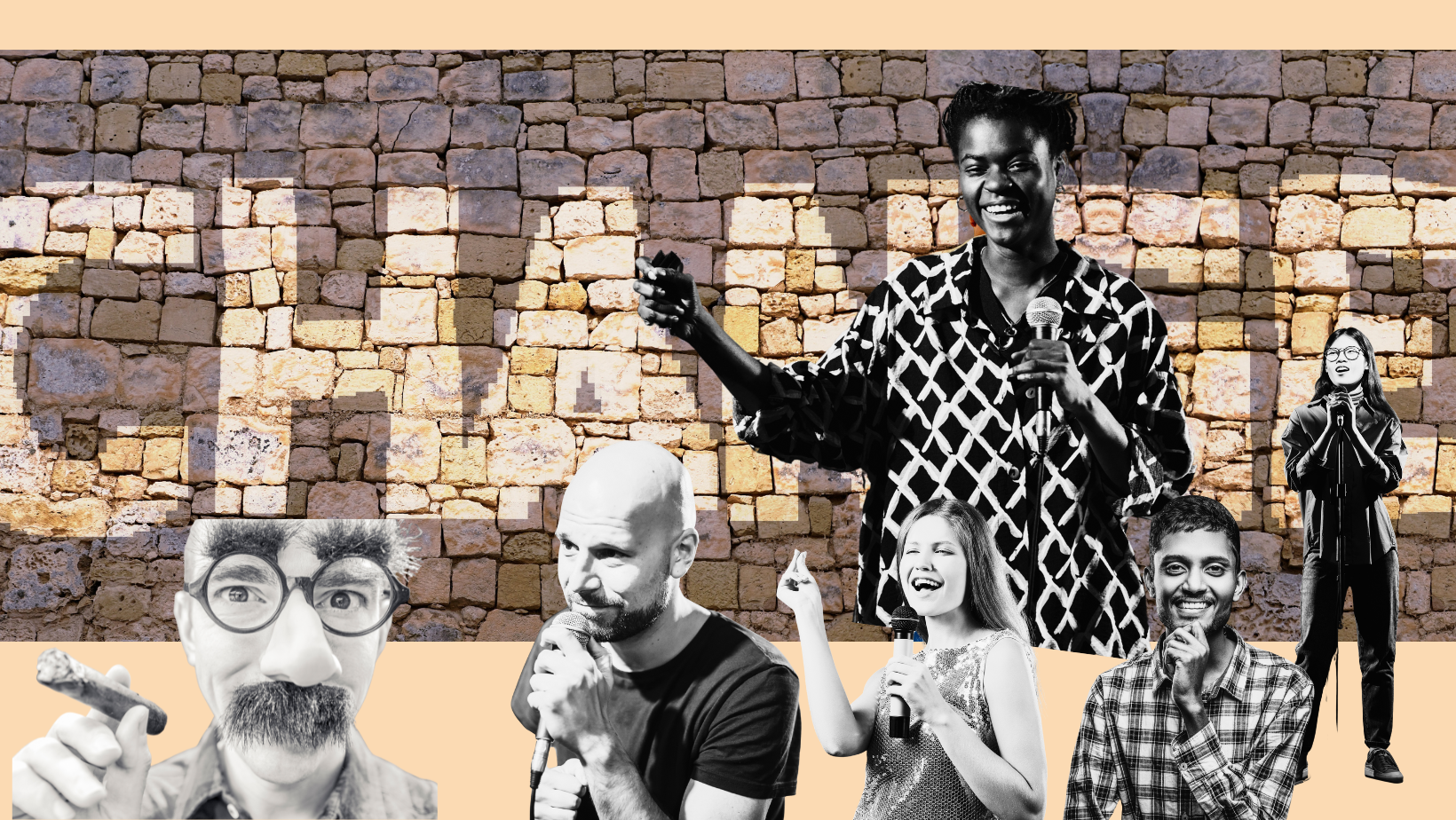
Introduction: Why Comedy and Politics Have Always Collided
Comedy has long been more than entertainment — it has been a lens through which society examines power, hypocrisy, and cultural change. From Mark Twain’s biting wit in the 19th century to Jon Stewart’s sharp satire on The Daily Show, comedians have shaped conversations about politics and social justice. In an era where trust in institutions wavers, comedy provides not just laughs but also critique, reflection, and even activism.
Historic Examples of Political Comedy
Mark Twain and Satire as Social Critique
Mark Twain famously wielded humor as a weapon against social and political absurdities. In works like The Gilded Age (1873), he exposed the greed and corruption of post-Civil War America. Twain’s blend of storytelling and satire made him one of the earliest American comedians to influence public opinion, embedding political commentary within widely accessible entertainment.
Charlie Chaplin and Anti-Fascism
Silent film star Charlie Chaplin used physical comedy to challenge authoritarianism. In The Great Dictator (1940), Chaplin delivered a scathing parody of Adolf Hitler and Mussolini, reminding audiences of the stakes of unchecked tyranny. His closing speech — earnest rather than comedic — blurred the line between performance and political plea, cementing comedy as a tool of moral persuasion.
Lenny Bruce and Free Expression
In the 1960s, Lenny Bruce redefined stand-up by pushing against censorship and conservative norms. Arrested multiple times for obscenity, Bruce used comedy to probe taboo subjects such as religion, race, and government hypocrisy. His legal battles set the stage for debates about whether comedians should have special protections under free speech.
Dick Gregory and the Civil Rights Movement
As one of the first Black comedians to break into mainstream white audiences, Dick Gregory combined sharp political critique with humor that exposed racial inequality. Performing during the height of the Civil Rights Movement, Gregory refused to shy away from racism and segregation. He often said that humor opened doors, allowing audiences to hear truths they might otherwise reject.
George Carlin and the Language of Dissent
George Carlin’s infamous “Seven Dirty Words” routine became a flashpoint in the U.S. Supreme Court’s 1978 FCC v. Pacifica Foundation decision,
which upheld government regulation of broadcast content. Carlin’s relentless critique of euphemisms, consumerism, and political doublespeak made him one of comedy’s fiercest defenders of free speech.
Richard Pryor and Social Reality
Richard Pryor transformed comedy into raw autobiography, using his personal struggles with addiction, race, and identity to confront systemic injustice. His 1979 Live in Concert special revealed how humor could emerge from vulnerability, while his unflinching honesty reshaped expectations of what stand-up could accomplish socially and politically.
Modern Activist-Comedians
Comedy as Identity and Inclusion: Hannah Gadsby
In the 21st century, comedy increasingly intersects with identity politics. Australian comedian Hannah Gadsby’s breakout special Nanette (2018) rejected traditional joke structures to deliver a searing critique of misogyny, homophobia, and trauma. By dismantling comedy’s conventions, Gadsby expanded the role of stand-up into something closer to performance art and political speech. Her work reflects a generation of comedians who see the stage as both a personal and political platform.
Comedy as Policy Advocacy: Jon Stewart and John Oliver
Jon Stewart revolutionized political satire during his tenure on The Daily Show, offering nightly critiques of media narratives, war, and government hypocrisy. His emotional testimony before Congress in 2019, advocating for 9/11 first responders, demonstrated how comedians can extend their influence beyond the stage.
Building on that model, John Oliver’s Last Week Tonight combines investigative journalism with comedy. Segments on net neutrality, tobacco regulations, and corporate malfeasance have even influenced legislation. Oliver’s format — long-form, well-researched, and infused with biting humor — shows comedy functioning as a form of public policy education.
Comedy and Network Fragility: Colbert, Kimmel, and Maher
Stephen Colbert and Jimmy Kimmel, late-night staples, have both faced sudden cancellations in 2025, signaling the precarious nature of comedy on broadcast networks. These cancellations echo Bill Maher’s 2002 firing from ABC after his controversial post-9/11 remarks. In Maher’s case, his attempt at political nuance collided with network and advertiser sensitivities. Collectively, these cases illustrate how network comedians balance satire with corporate caution, and how quickly the pendulum can swing against them.
Free Speech & Censorship in Comedy
Comedy has always been a battleground for free expression, and in today’s media landscape, that tension is sharper than ever. The careers of Jon Stewart, Stephen Colbert, and John Oliver — comedians who transformed late-night into platforms for civic engagement — highlight both the power and the risks of speaking truth to power. Bill Maher’s earlier cancellation in 2002 foreshadowed the delicate line network comedians would continue to walk. In recent months, even household names like Stewart and Colbert have faced abrupt cancellations, underscoring the fragility of network comedy in an era where backlash, ratings pressure, and corporate caution collide overnight. What was once a stage for daring satire is now a tightrope act between free speech, public sensitivity, and corporate survival.
The Fragility of Network Comedy
The abrupt cancellation of Colbert and the indefinite suspension of Jimmy Kimmel illustrate how vulnerable mainstream comedy has become. Unlike independent podcasters or streaming-based comics, late-night hosts depend on corporate networks that are highly risk-averse. A single misstep, a poorly received joke, or shifting advertiser priorities can end decades-long careers in weeks. These incidents speak less to the individual comics than to the precarious state of network-backed comedy, where the room for satire continues to shrink.
Joan Rivers and the Edges of Offense
No discussion of free speech in comedy would be complete without Joan Rivers. Known for her cutting wit and fearless delivery, Rivers often went where few others dared. In 2013, she ignited a firestorm after joking on Fashion Police about Heidi Klum’s Oscar party dress: “The last time a German looked this hot was when they were pushing Jews into the ovens.” The Anti-Defamation League (ADL), led by Holocaust survivor Abraham H. Foxman, swiftly condemned the remark as “vulgar and offensive,” criticizing both Rivers for making the joke and her co-hosts for laughing along.
Rivers, however, stood firm. Rather than apologize, she explained that her dark humor was rooted in remembrance: “My husband lost the majority of his family at Auschwitz, and I have always made it a point to remind people of the Holocaust through humor,” she told The Hollywood Reporter. For Rivers, comedy was not about erasing painful history, but about keeping its memory alive — even if it meant shocking audiences in the process.
The Ongoing Debate
Rivers’ unapologetic stance underscores a larger dilemma: should comedians serve as guardians of free speech at any cost, or should they bend to evolving cultural sensitivities? The cancellations of today’s late-night giants and the controversies of comics like Rivers show that the debate is far from settled. Comedy’s power lies in its ability to provoke, but that same power guarantees it will always sit at the center of society’s fiercest arguments about expression, taste, and truth.
Conclusion: Laughter as Resistance and Reflection
From Twain’s satire to Carlin’s defiance, from Stewart’s advocacy to Gadsby’s radical vulnerability, comedy has consistently been more than amusement. It is a mirror, a critique, and sometimes, a rallying cry. In times of political upheaval, comedy remains one of the few spaces where truth can be spoken loudly, cleverly, and — if the comic is brave enough — dangerously.
📖 More Resources You May Enjoy
Charlie Chaplin - Final Speech from The Great Dictator
Lenny Bruce on the Steve Allen Show April 5, 1959
Lenny Bruce discussing fake news
7 Words Extended Version | George Carlin | Again! (1978)
Richard Pryor: Civil Rights Comic | Omit The Logic
Dick Gregory • Standup Comedy • 1965 [Reelin' In The Years Archive]
Hannah Gadsby: Nanette | Official Trailer [HD] | Netflix
Trump Divides America in Aftermath of Charlie Kirk Murder & Republicans Block Epstein File Release
Stephen Colbert Announces The Cancellation Of “The Late Show”
9/11 comment Bill Maher got fired for.
Joan Rivers on Her Controversial Heidi Klum Joke
Jimmy Kimmel and Cancel Culture | Real Time with Bill Maher (HBO)
Jon Stewart slams Congress over benefits for 9/11 first responders
👉 Want to see today’s activist-comedians in action? Explore live online comedy shows on Plauzzable, where laughter and community come together.
More articles you may like
Top 10 Myths About Being a Stand-Up Comedian
Myth: Women Aren’t Funny — Let’s Set the Record Straight
How to Write a Joke: Step-by-Step for Beginners
Written by
 Plauzzable